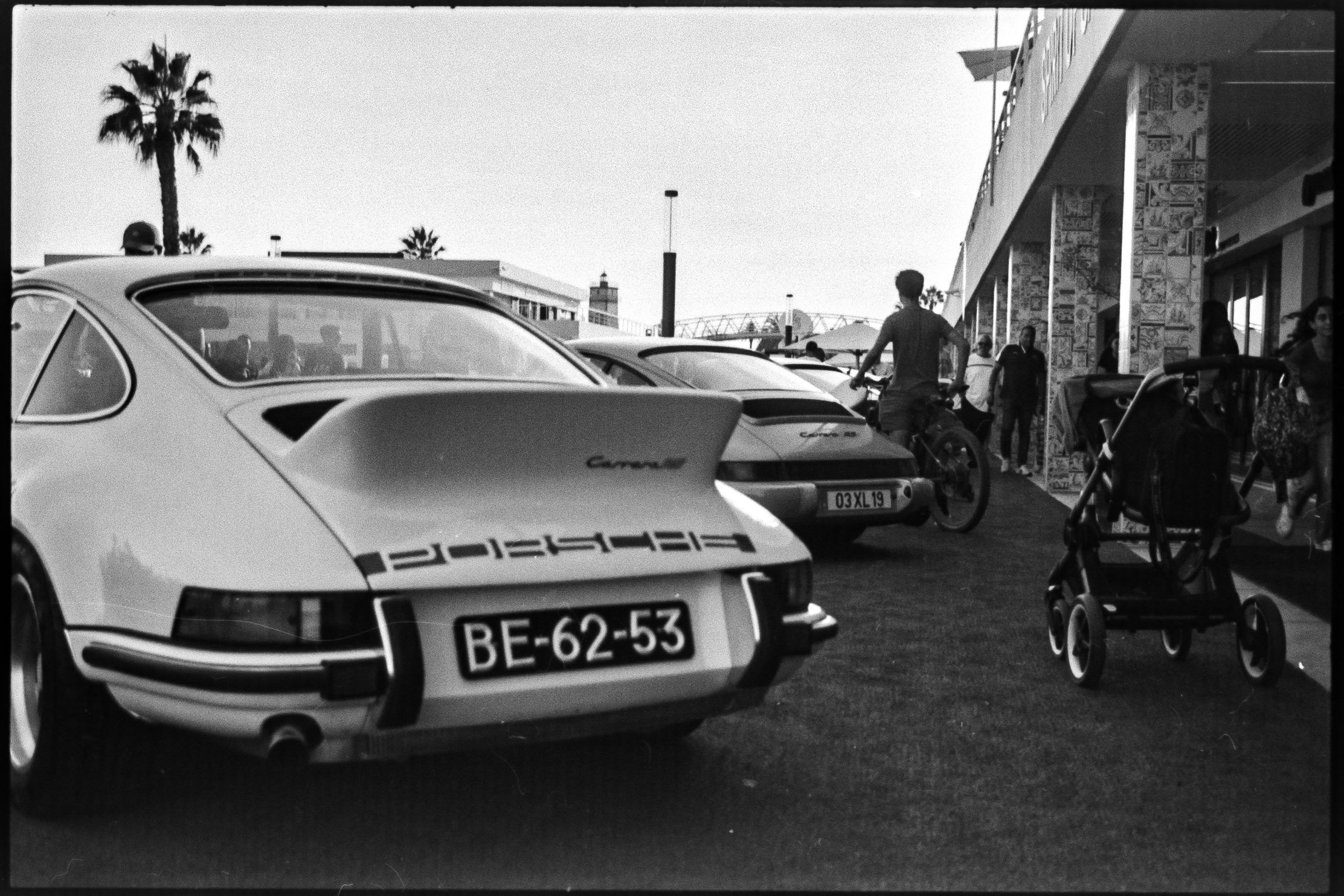
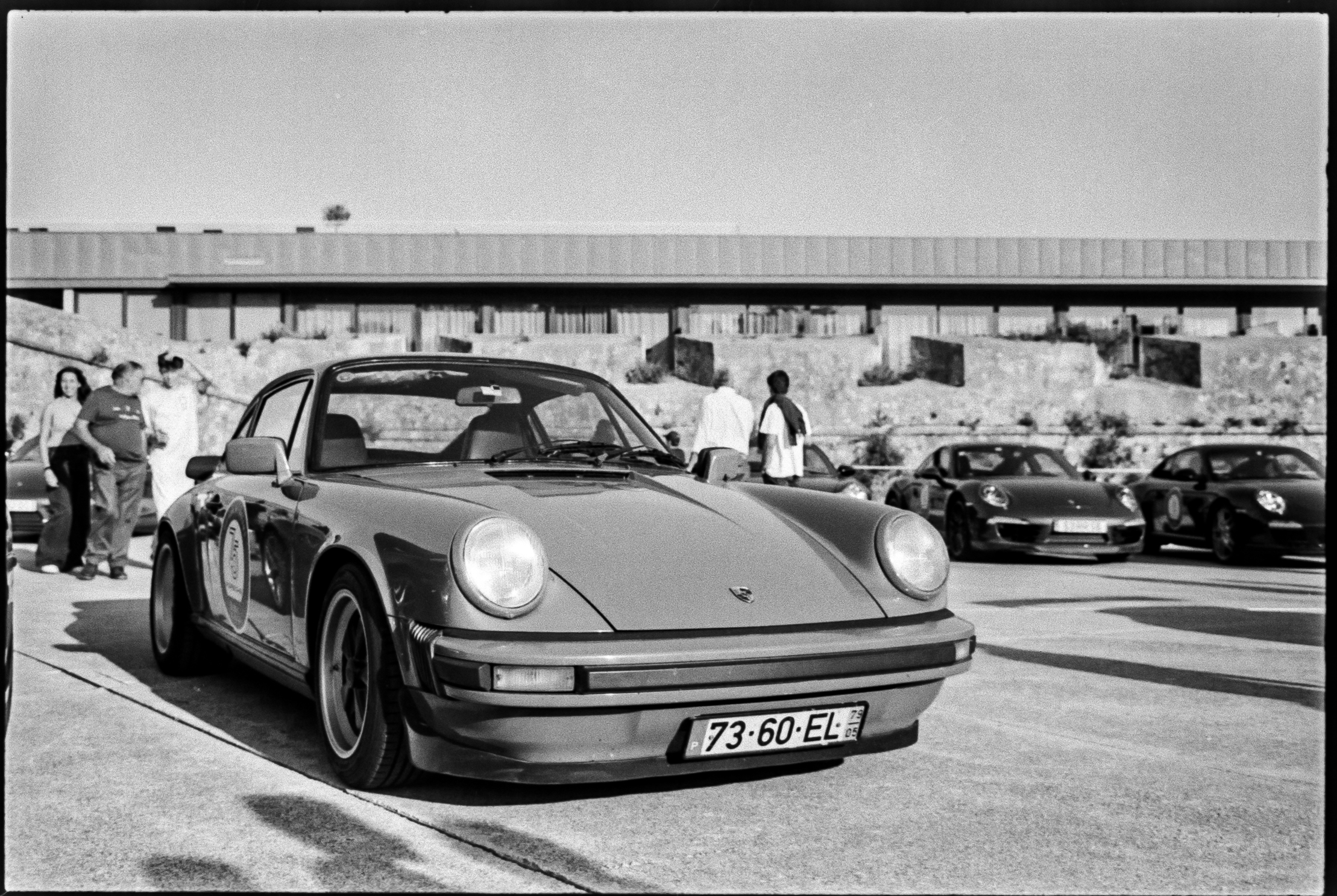
I recently had the privilege of traveling to Portugal to shoot a fleet of classic Porsche cars. From the moment I landed, I knew this project was going to be something special. The vibrant scenery of Portugal, with its golden coastlines and rustic towns, was the perfect backdrop for these vintage icons. But there was another aspect that made the shoot unique: the fact that I was using a film camera.
There’s something poetic about photographing classic cars with film. Both have an air of timelessness, craftsmanship, and character. The subtle grain of film complements the patina on the old Porsches, each shot feeling like it was pulled from a different era. Shooting film, however, comes with its own set of challenges, particularly when you’re managing clients with specific expectations.
Managing Clients’ Expectations with Film
One of the trickiest parts of using film, especially for an event or a commercial shoot like this, is the timescale. Unlike digital photography, where you can see the results immediately, film requires a longer process. You load the film, shoot your images, and then wait—sometimes days or even weeks—for the film to be processed and scanned.
When working with clients, it’s important to communicate this upfront. While the romanticism of film is often well-understood, the reality of delayed results and the potential for unexpected outcomes can make some nervous, especially when working on a tight deadline.
I usually manage this by setting clear expectations early on. During the pre-shoot briefing, I make it clear that the timeline for seeing the final images will be longer than if we were working digitally. I walk them through my process and explain that film has an inherent unpredictability that can result in some magical moments but can also mean some shots may not turn out as planned.
The Unpredictability of Film in Events
Shooting an event on film adds another layer of complexity. With digital, if something goes wrong, you can quickly adjust and reshoot. With film, you don’t always know what went wrong until it’s too late. At the Porsche event, for example, I had only one chance to capture certain moments—the cars zooming down cobblestone streets, the golden sunset glinting off polished bodywork, or the candid interactions between the car owners.
While digital offers convenience and control, film brings a spontaneity that can elevate the photos in unexpected ways. There’s something about not knowing exactly what you’ve captured until you develop the film that adds to the creative excitement.
However, for clients, the unknown can be unnerving. In these situations, I find it helpful to provide a backup plan, such as capturing a few critical moments digitally alongside the film shots. This way, the client can still see immediate results while understanding that the true magic of the project will come with the developed film.


The Reward of Film in Car Photography
Despite the challenges, the reward of shooting on film far outweighs the risks for me. The rich tones, the natural contrast, and the imperfections all add to the narrative. When I saw the scans of the classic Porsches against the sun-soaked Portuguese landscape, I knew the gamble had paid off.
Each car told its own story, and the film added to the sense of history and nostalgia that these vehicles carry with them. For this particular project, the slower, more deliberate process of film photography mirrored the experience of driving a classic car—taking time to appreciate the craftsmanship, the quirks, and the journey rather than just the destination.
In the end, managing clients’ expectations while shooting on film comes down to transparency, clear communication, and confidence in the medium. Film may take longer and be unpredictable, but when everything comes together, the results are worth every moment of waiting.
Portugal, vintage Porsches, and film—a combination I won’t soon forget. Each shoot with film is an adventure, and the journey is just as rewarding as the final image.
 slater_films
Leave a comment