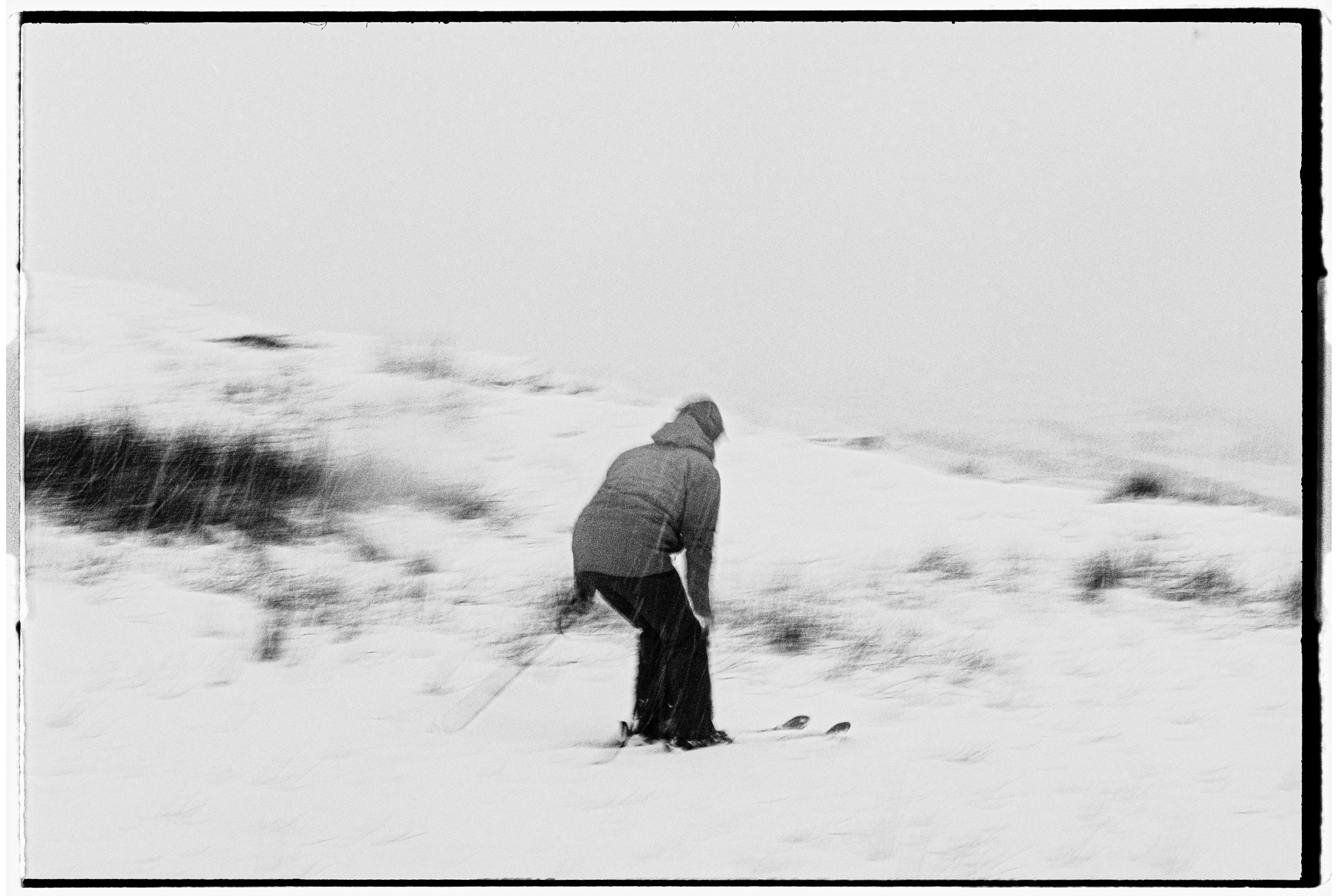
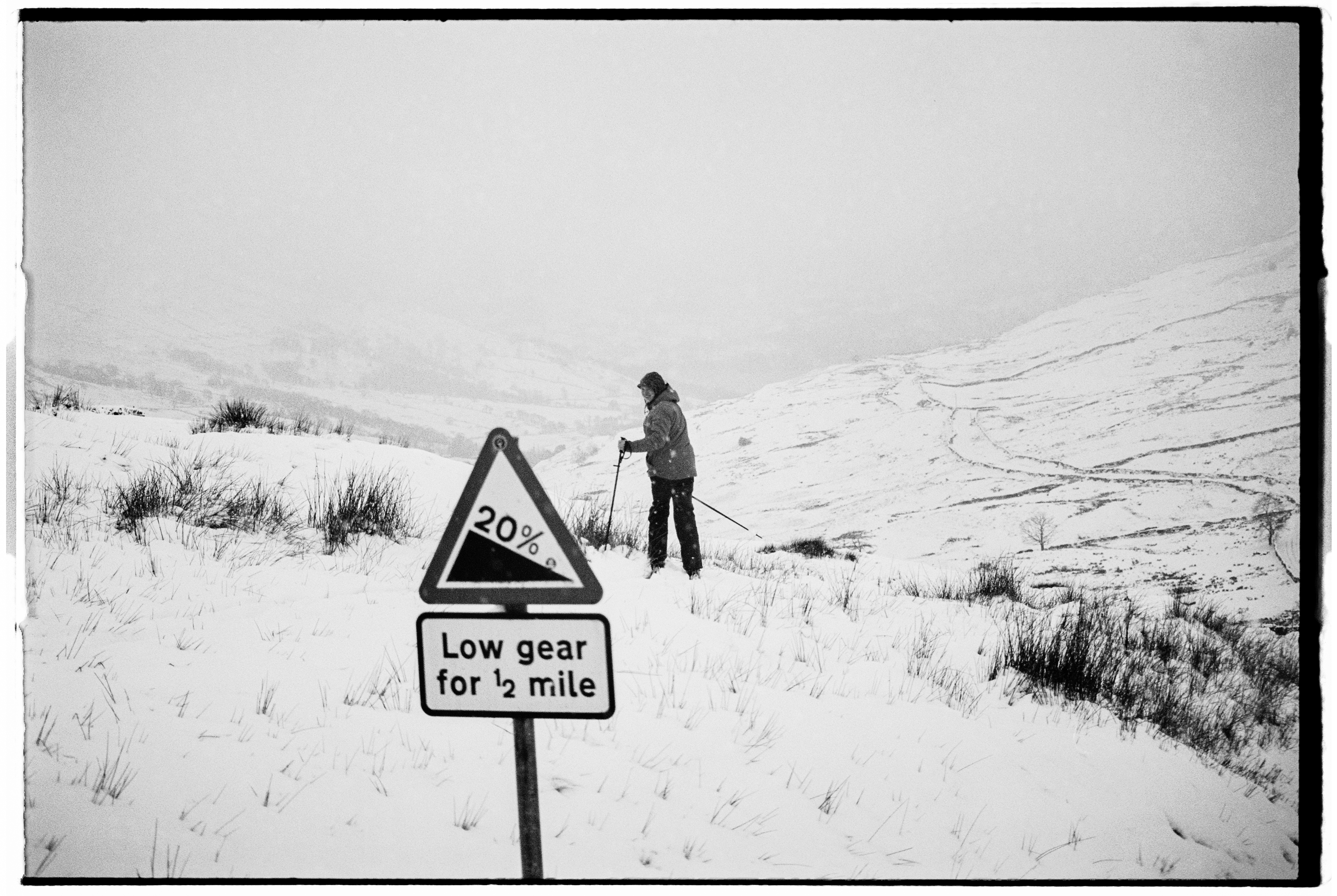
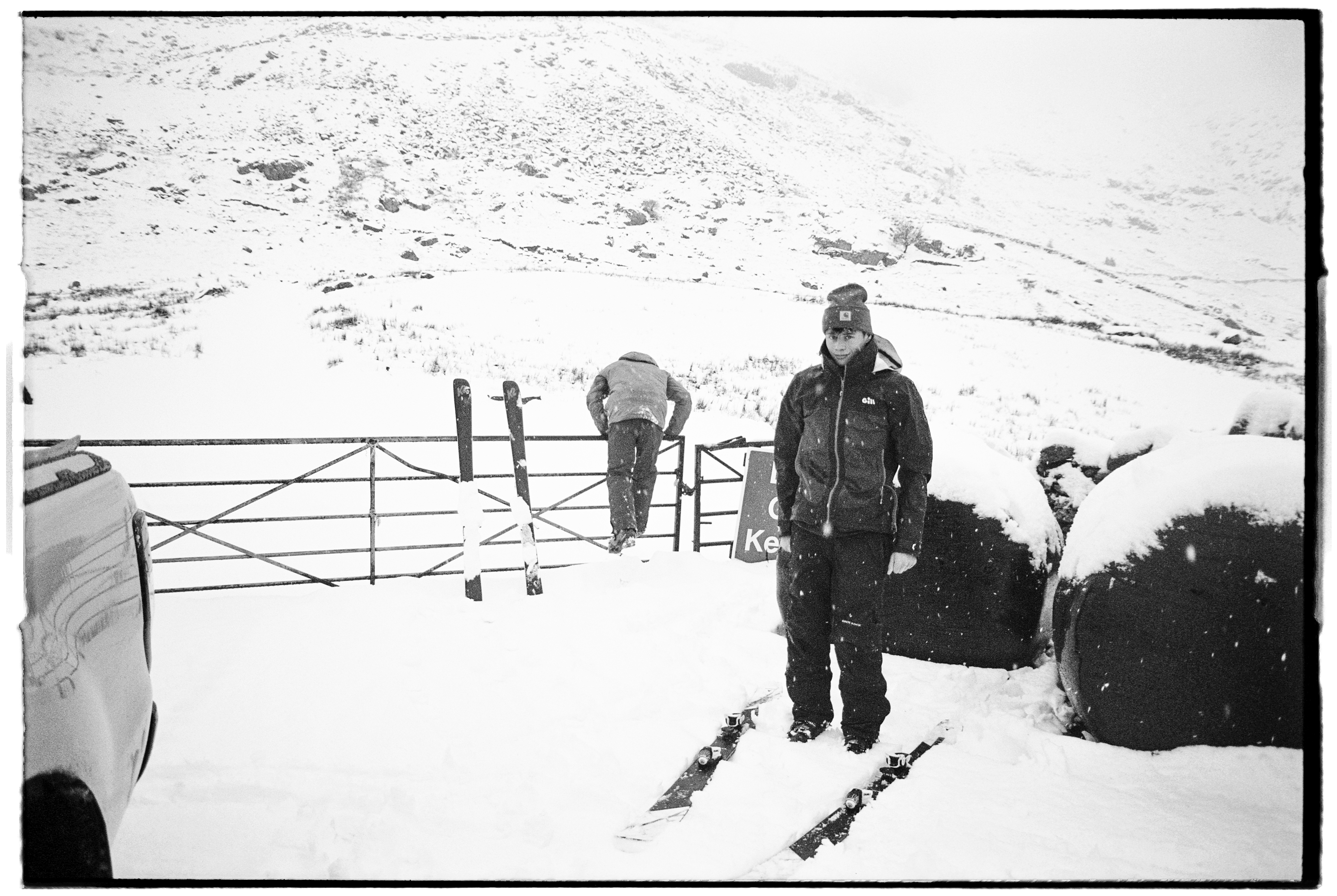
There’s something captivating about shooting on film in a snowy landscape—an experience that combines both beauty and challenge. The images you see above were taken during a recent ski trip, with a snowstorm blowing in hard across the hills. Everything about this shoot was unpredictable: from the way the snow obscured the landscape to the limits of visibility. And of course, using film added an extra layer of uncertainty and excitement.
The Beauty and the Challenge of Snowy Conditions
Snow has a magical way of transforming the world, turning familiar scenes into ethereal landscapes of white expanses and soft contours. But as beautiful as it is, snow can also be one of the most challenging conditions to photograph in, especially with film.
One of the primary challenges is exposure. Snow reflects a ton of light, which can easily fool your camera’s meter into underexposing the shot. When shooting with film, you don’t have the luxury of instantly reviewing your images, so you’re flying a bit blind. I had to rely on intuition and a bit of experience to adjust settings and account for the brightness, knowing that the film might interpret the snow differently than I expected.
The cold weather is another factor. Not only are your fingers numb and fumbling with the dials, but cold can also affect your camera’s mechanics. Batteries drain faster, and the film can become brittle, making it harder to handle. Yet despite all of this, there’s a strange thrill in embracing these difficulties. I often find myself energized by the challenge.
The Excitement of Shooting Film
In a world dominated by digital photography, where everything can be previewed and edited in real-time, film photography forces you to let go. You don’t get to know if you nailed the shot until you’ve developed the negatives. This lack of immediate feedback is both exhilarating and nerve-wracking.
With this particular shoot, I had no idea what the results would look like. The snow was swirling around, blurring the scene in front of me, and I couldn’t predict whether the grain of the film would accentuate that softness or lose all the detail. Every shot felt like a gamble, a creative leap into the unknown. I loved that feeling—knowing that the results would be a surprise when I finally developed the film.
The second image, with the two skiers carrying their gear, captures a moment of stillness in the chaos. It’s one of my favorites from the day, not because I planned it, but because the unpredictability of the conditions added an authenticity to the shot that you couldn’t recreate with digital precision. The grain of the black-and-white film also adds a timeless quality to the images, making them feel like they could have been taken decades ago or yesterday.
Reflecting on the Process
Shooting in the snow on film is a humbling experience. It reminds you that you can’t control everything—that sometimes the best photos come from embracing uncertainty and going with the flow of the environment around you. There’s a rawness to these images, an authenticity that digital often loses in pursuit of perfection.
Would I have done anything differently if I could’ve previewed the shots? Maybe. But the beauty of film is that it teaches you to accept the imperfections and surprises that come with it. It’s a bit like the process of skiing itself—sometimes you find the perfect line down the mountain, and other times you stumble through powder, but either way, it’s the journey that matters.
These photos are a testament to the magic of combining film with the unpredictable beauty of a snowy day. They capture more than just a moment; they encapsulate the feeling of being there—the cold, the excitement, the unknown. And that’s something that digital can’t replicate.
 slater_films
Leave a comment